
Подводни „чадъри“ спасиха корали от смъртоносно прегряване в опит на американски учени
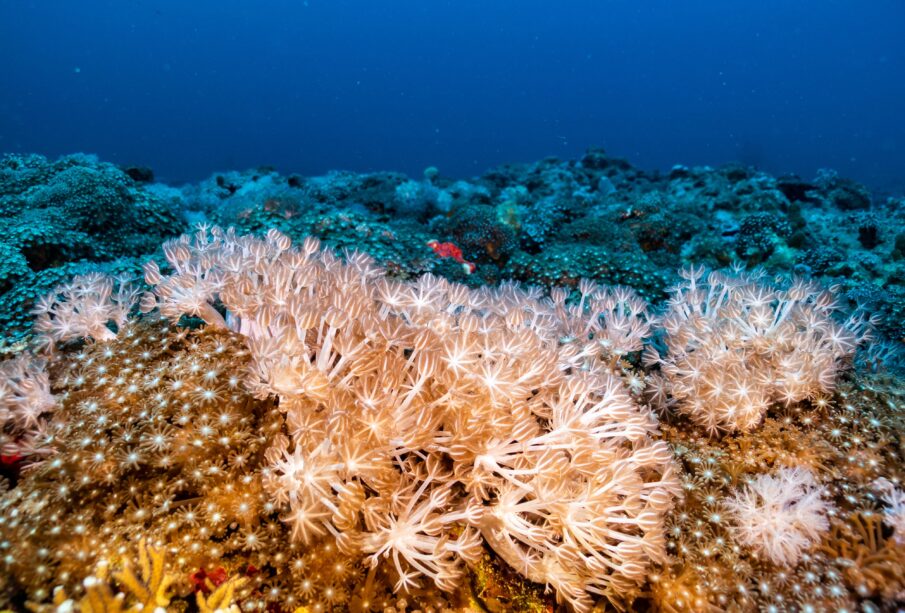
EILAT, ISRAEL - JULY 14: A soft coral lies amid a carpet of various coral species at 45 metres depth on July 14, 2022, in Eilat, Israel. Scientists believe that, in certain places, soft corals will replace hard corals due to their quick-growing nature, however the soft corals do not protect coastlines against storm surges, waves, and erosion. Coral reefs are complete ecosystems, and although the reef in Eilat is perhaps capable of withstanding climate change, it is also under threat from human factors - tourism development, waste run-off into the sea and light pollution. Despite sea temperatures rising faster in the Gulf of Aqaba (also known in Israel as the Gulf of Eilat) than the global average rate, the coral reef of the northernmost point of the Red Sea exhibit remarkable resistance and seem immune to the effects of global warming. Scientists are trying to understand the biological capacity of these corals to live at higher temperatures, hoping this knowledge could help reefs elsewhere in the world. The scientific community estimates that over 90% of reefs will die by 2050 due to climate change and direct human impact. The corals in this Red Sea gulf might be one of the last remaining complete ecosystems by 2100. However, there is a possibility that this surviving coral reef could be used as a blueprint for an entirely new climate-resistant ecosystem. (Photo by Lukasz Larsson Warzecha/Getty Images).